


Home Is What You Make It
There’s a version of ranching history that gets told in simple terms—dusty men in wide hats, driving cattle into the horizon while the campfire coffee boils over. It’s a good story. It’s just not the whole story.
Because just outside the frame—sometimes in a skirt, sometimes in chaps, usually with a baby on her hip, back or waiting on the porch at the house—was a woman keeping the whole thing stitched together.
Women have always been part of ranching. Not in a side-note kind of way, but in a “this doesn’t work without them” kind of way.

Long before barbed wire carved up the West, women in Indigenous communities were managing land, food systems, and animals with a level of intuition and stewardship we’re still trying to relearn today. When Spanish vaqueros brought cattle north into what would become the American Southwest, women rode, roped, cooked, doctored, and endured right alongside the men. Survival didn’t leave much room for job descriptions.
By the time American ranching took hold in places like Arizona, Texas, and Montana, the myth had already started to take shape—the rugged cowboy, the lone rider. But the reality? Ranching was (and still is) a family operation. Women weren’t just “helping out.” They were running books, birthing calves, teaching kids, growing food, mending fences, and making impossible decisions when storms, drought, or markets didn’t go their way.
And sometimes, when life demanded it, they ran the whole outfit.
Take Annie Oakley—not a rancher in the traditional sense, but a symbol of a capable, independent Western woman who could outshoot most men of her time. Or Fannie Sperry Steele, bronc rider and rancher in early 1900s Montana, who didn’t just participate in ranch life—she dominated it. Then there’s Margaret Borland, who drove thousands of longhorns up the trail herself after her husband passed. No backup plan. No safety net. Just grit, responsibility, and a herd that needed moving.
These weren’t exceptions. They were just the ones who got written down.
Most women’s stories stayed quieter. Passed along in recipes, in journals, in the way a daughter learned to read the sky or a son learned that strength didn’t always look loud. Ranch women became masters of doing what needed doing, without much fuss about credit. There’s a certain kind of toughness in that—less about proving something, more about knowing there’s no one else coming to do it for you.
And maybe that’s the piece that feels a little missing today.
Not the hard work—we’ve still got plenty of that. Anyone raising animals, especially out here in the desert, knows the long days and longer nights haven’t gone anywhere. Calving, lambing, keeping poultry alive, still all part of the job.
Water still matters more than almost anything. Markets still shift when you least expect it.
But there’s something about the older way of ranching—especially the way women held it—that feels… steadier.
It wasn’t just about productivity. It was about responsibility. To the land, to the animals, to the family, and to the future. There was an understanding that you didn’t just take from the ground—you tended it, because your kids (and their kids) would be standing on the same piece of dirt one day.
Women carried a lot of that mindset.
They were often the ones noticing when the garden soil needed a rest, when a cow didn’t look quite right, when the pantry needed stretching because winter might be lean. They were planners, problem-solvers, and quiet observers of patterns that don’t show up on spreadsheets.
And they had a way of holding both toughness and tenderness at the same time.
That’s not something you can fake. And it’s not something you learn overnight.
My mother-in-law was the one who sparked that in me, out here. She’s the vet, cow boss and mother.
Out here, even now, you still see it.
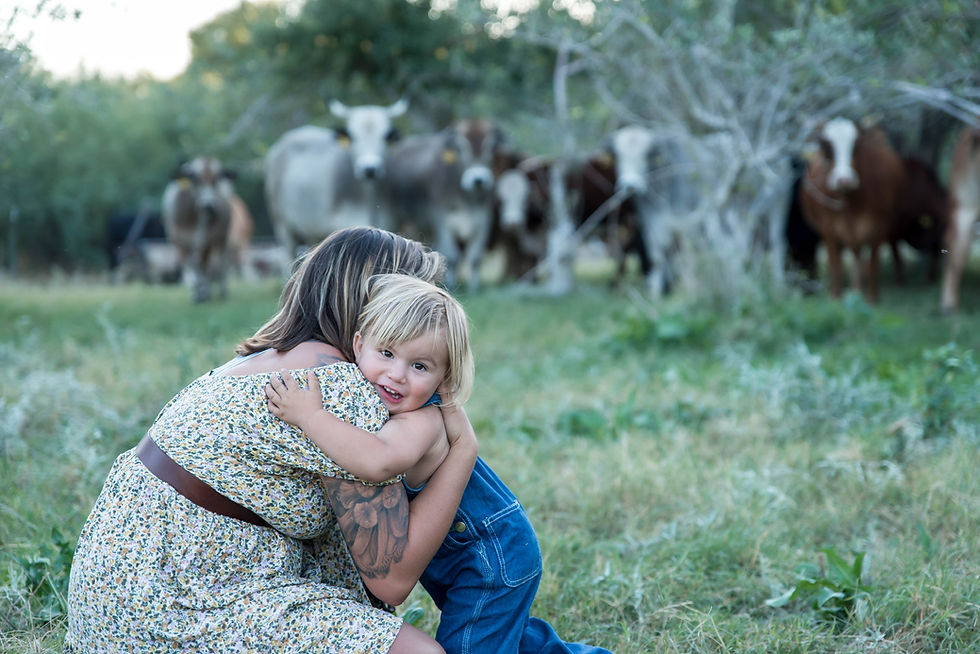
In the moms bouncing between a sick kid and a sick calf.
In the women figuring out how to make a business pencil while staying true to the land.
In the ones who can run equipment, doctor livestock, and somehow still remember who likes their eggs scrambled and who wants them fried.
It’s not glamorous. It’s not loud. But it’s real.
And maybe what we’re missing isn’t the past itself—but the pace of it. The connection. The understanding that a good life isn’t built overnight, and it sure isn’t built alone.
Ranching women have always known that.
They’ve lived in the space between patience and urgency. Between holding on and letting go. Between raising animals and raising people—both of which will humble you faster than just about anything else.
So when we talk about the history of ranching, it’s worth widening the lens a bit.
Because the story was never just about the cowboys.
It was about the women who made sure there was something worth riding home to.


Comments